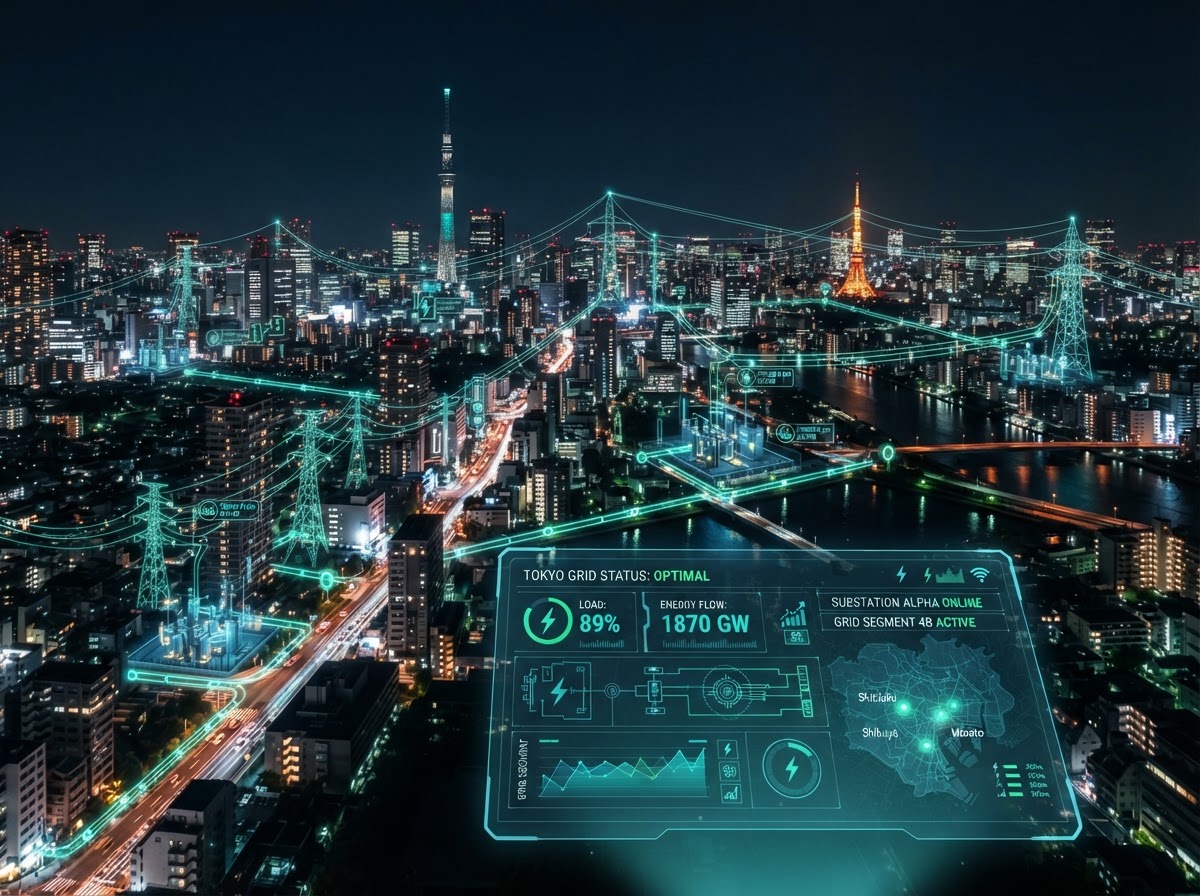
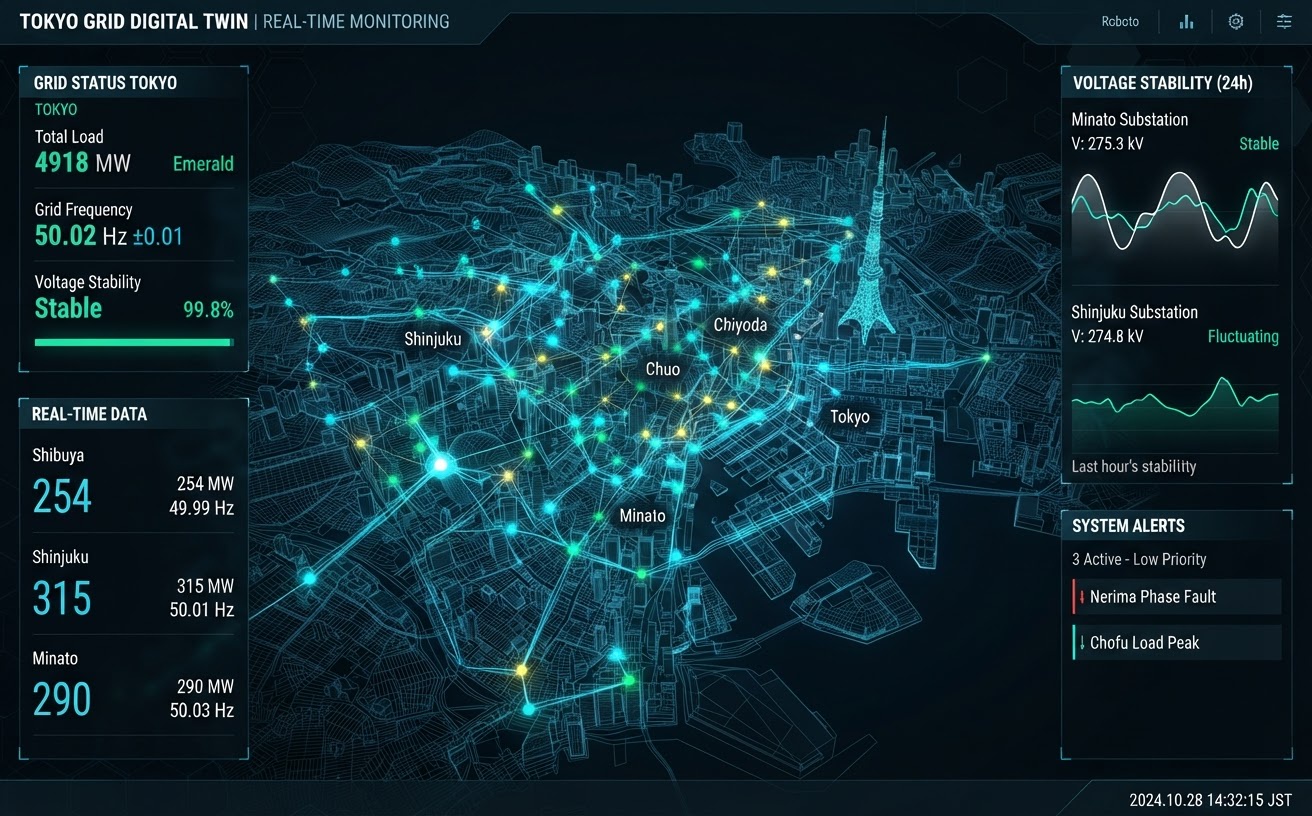
Tokyo Grid Works designs, integrates, and operates hyper-resilient microgrid topologies and AI-synchronized distribution networks. We bridge high-density urban infrastructure with sub-cycle fault isolation and decarbonized distributed energy resources.
Operational Uptime
Six-nines reliability across high-density urban wards.
Peak Capacity Managed
Real-time algorithmic dispatch and demand-response.
Fault Detection & Isolation
Sub-cycle self-healing solid-state relay response.
Carbon Curtailment
Optimized integration of rooftop BESS and offshore wind.
From sub-second IoT sensing relays to high-density underground transmission networks, we deliver turnkey advisory, algorithmic dispatch modeling, and certified high-voltage commissioning.
Deploying high-frequency synchrophasors (PMUs) and distributed edge computing to predict voltage fluctuations, prevent thermal overload, and achieve microsecond state estimation.
Core Protocols & Focus:
Seamless aggregation of offshore wind, utility-scale BESS, and commercial rooftop solar into existing bulk supply grids with synthetic inertia and grid-forming inverters.
Core Protocols & Focus:
Decentralized urban microgrids engineered for critical hospitals, transportation nodes, and data campuses capable of seamless sub-12ms islanding and autonomous black-start recovery.
Core Protocols & Focus:
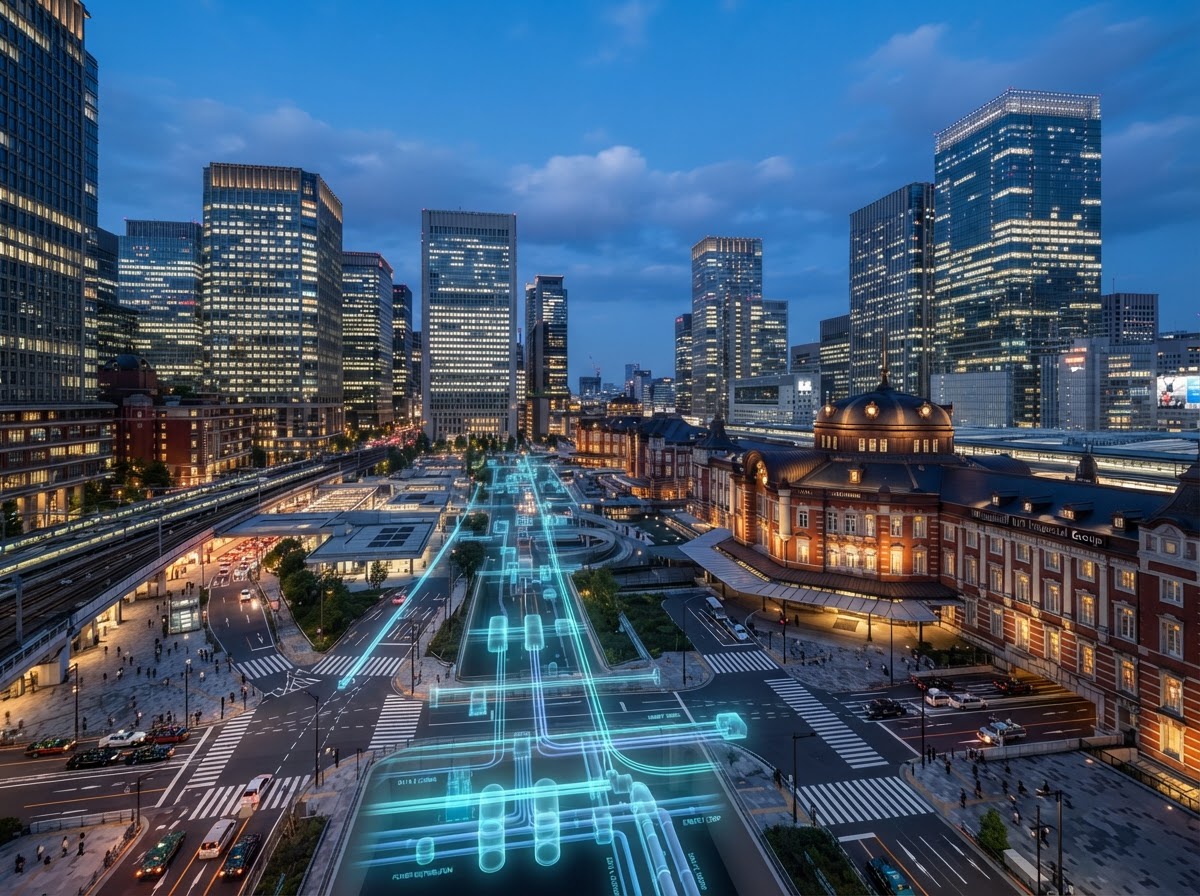
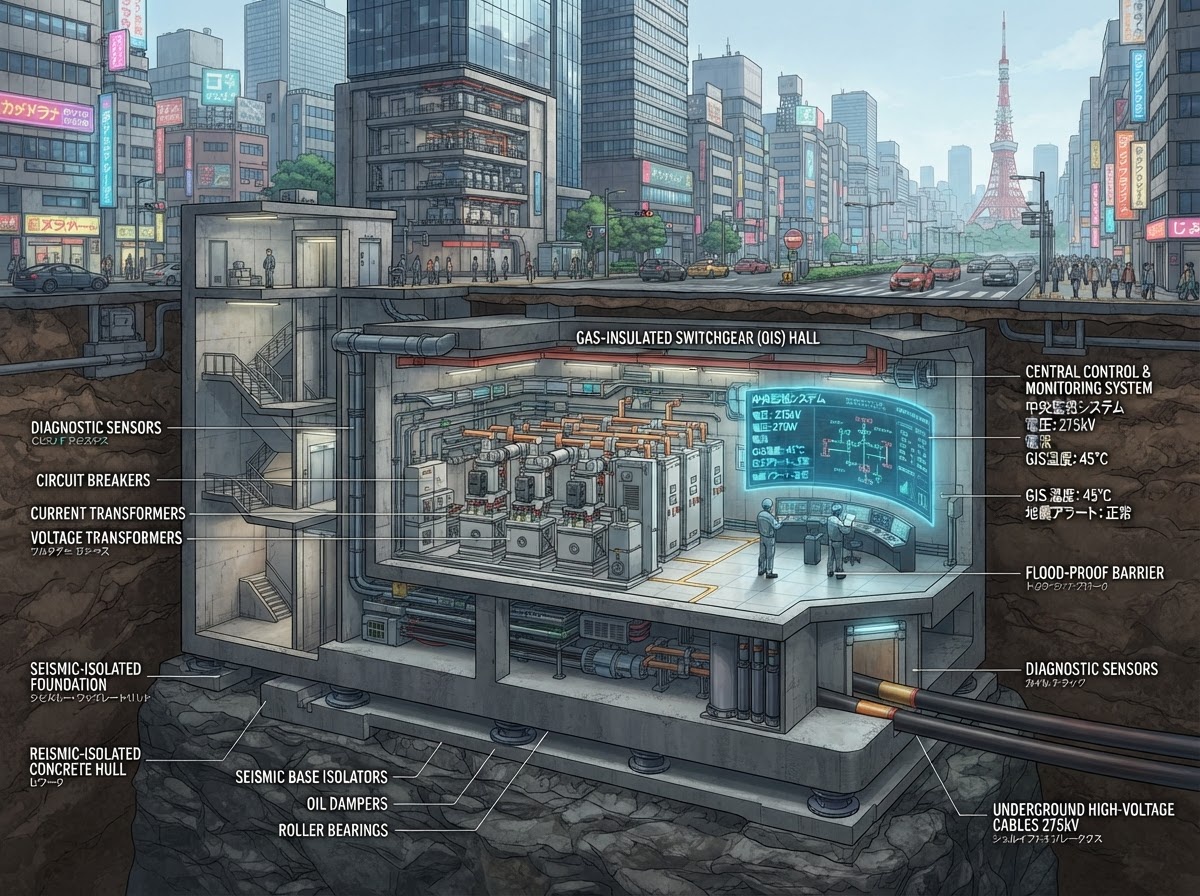
Comprehensive electrical engineering for underground 66kV to 275kV gas-insulated substations (GIS), compact urban cable routing, seismic bracing, and short-circuit fault mitigation.
Core Protocols & Focus:
Engineered specifically for hyper-dense Pacific Rim metropolitan corridors prone to seismic events, severe typhoons, and subterranean flash floods. Our four-stage architecture prevents cascading collapse through deterministic physical hardening and autonomous sub-cycle switching.
Subterranean gas-insulated switchgear (GIS) isolated on multi-axis fluid viscous dampers. Hermetically sealed submarine-grade sub-chambers withstand up to 4 meters of surface urban flooding without interruption.
High-speed optical fiber transducers detect high-frequency electromagnetic transients caused by cable insulation breakdown or micro-arcing, pinpointing subterranean fault coordinates to within 1.5 meters before flashover occurs.
If transmission tie-lines decouple, automated fast-static transfer switches sever compromised feeders and partition districts into self-sustaining microgrid islands sustained by local BESS, fuel cells, and commercial cogeneration assets.
Coupled with JMA meteorological telemetry, our neural network models typhoon landfall vectors 72 hours out, automatically pre-charging regional storage buffers and re-optimizing spinning reserves to absorb sudden renewable curtailments.
Seismic Damper Readiness: 100% • Submersible Sump: Dry
Seismic Protection
M 9.0
Simulated subduction earthquake survivability.
Restoration Speed
4.2 min
Autonomous ring circuit reconfiguration mean time.
All METRO-SHIELD™ guidelines conform with Ministry of Economy, Trade and Industry (METI) High-Pressure Gas Safety Act & Critical Infrastructure Resilience Standards (CIRS Level 4).
From central financial wards to offshore mega-ports, review our validated operational data across automated microgrid ring networks, BESS peak shaving, and sub-cycle fault isolation.
Engineered a dual-redundant underground ring topology linking 14 commercial towers. Features solid-state static transfer switches and automated load-shedding algorithms that guarantee continuous tier-4 power for global algorithmic exchange servers even during major regional transmission disruptions.
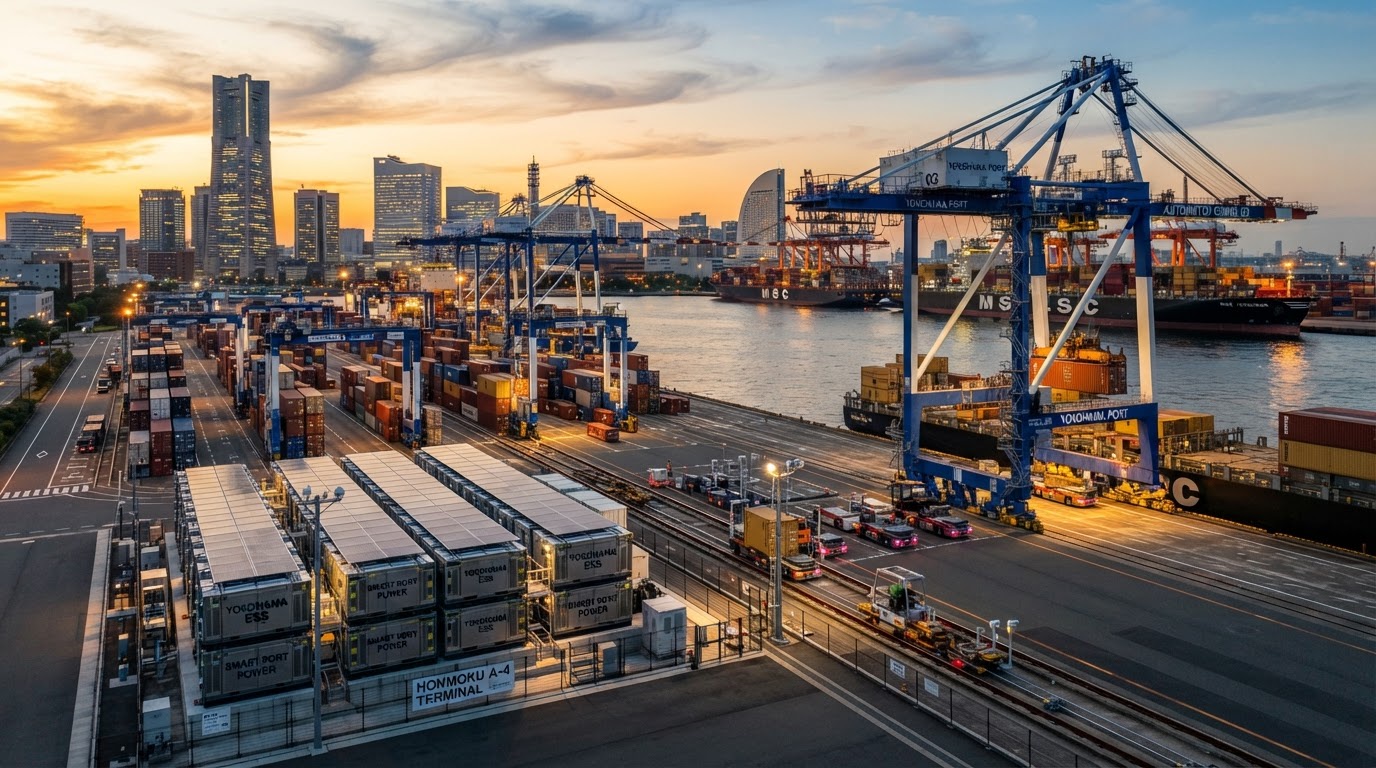
Integrated regenerative braking power recovery from 28 high-capacity gantry cranes with a 45MW utility battery array. Eliminates voltage sags during simultaneous crane hoists while injecting excess power back into municipal feeders.
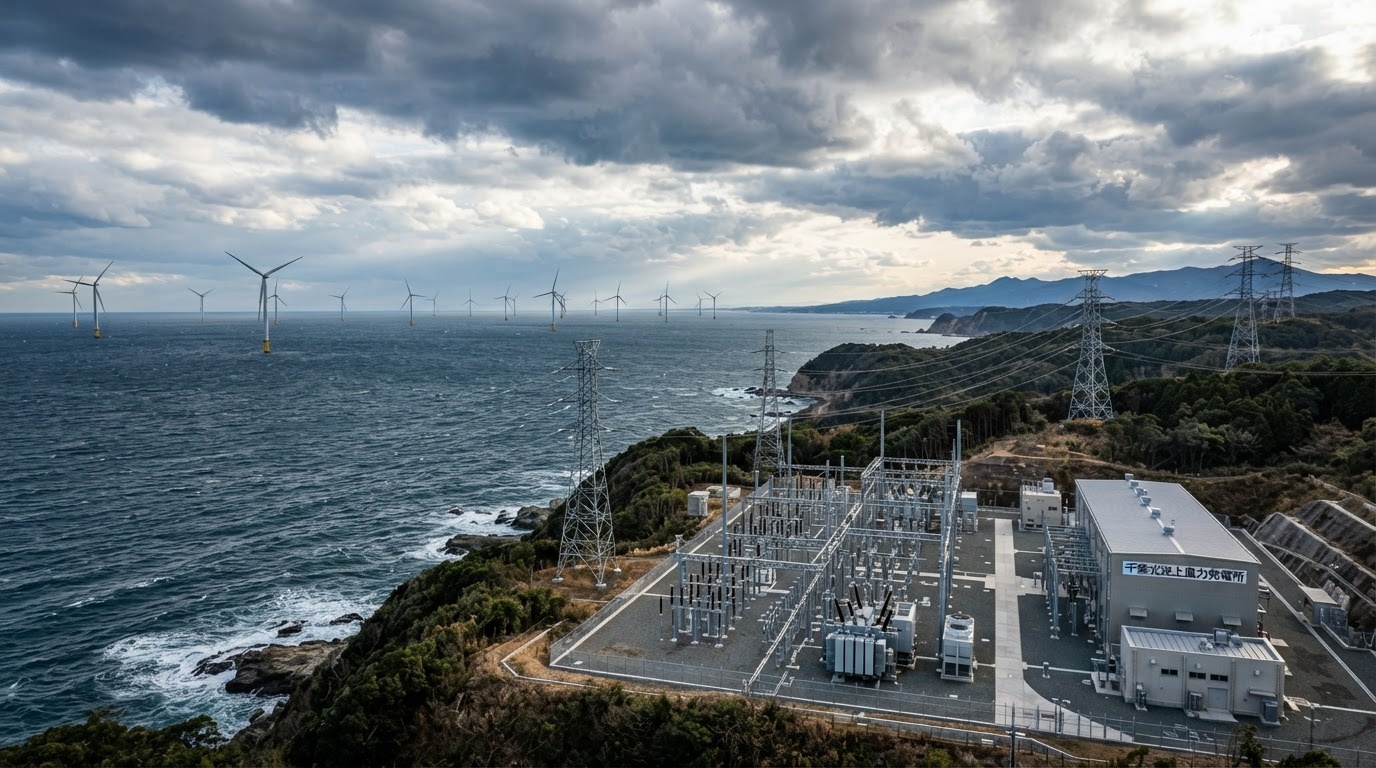
Solved high-frequency harmonic distortion and thermal congestion for 600MW of offshore wind feeding into regional 50Hz transmission trunks through grid-forming STATCOM units and dynamic line rating (DLR) monitoring.
All telemetry metrics independently audited and validated by third-party engineering evaluators per IEEE/METI standards. Complete whitepapers and topological schematics available upon client NDA execution.
We synthesize microsecond-level telemetry with physics-informed neural networks to construct living digital twins of complex urban networks—predicting instabilities, simulating contingency cascades, and orchestrating millisecond load response.
Electromagnetic transient (EMT) and dynamic phasor simulations run in parallel with physical substations. Stress-test N-1 and N-2 grid contingencies without risking customer disruption.
Deep temporal transformers ingest weather radars, passenger transit density, and dynamic building occupancy data to forecast 48-hour localized feeder ramp rates down to 1-minute resolution.
Networked Phasor Measurement Units (PMUs) streaming at up to 120 samples per second. Instantly exposes inter-area phase angle divergence and sub-synchronous oscillations before relays trip.
Our four-phase consultative engagement provides municipal authorities, regional utilities, and critical enterprise campuses with complete oversight, strict regulatory alignment, and risk-insulated commissioning.
Topological Baseline Assessment
High-density power-flow studies, subterranean corridor mapping, transformer thermal imaging, and baseline fault current evaluations using transient EMT software.
Key Deliverables:
METI & IEEE Interconnect Permitting
Direct liaison with municipal councils and grid operators (OCCTO/TEPCO), drafting detailed high-voltage schematics, protection coordination, and seismic clearance filings.
Key Deliverables:
Commissioning & Live Synchronization
On-site deployment of solid-state relays, GIS switchgear, fiber synchrophasors, and battery arrays, capped by live-grid black-start and sub-12ms islanding validation tests.
Key Deliverables:
24/7 Digital Twin & Telemetry
Continuous sync with our Shinjuku Network Operations Center. Real-time predictive component degradation alerts, automated seasonal dispatch tweaks, and priority disaster dispatch.
Key Deliverables:
All system cutovers and live relay retrofits are engineered using synchronized bypass loops—ensuring enterprise tenants experience zero unnotified voltage dips or downtime during transition.
Peer-reviewed frameworks, utility-scale decarbonization analyses, and executive whitepapers authored by our Shinjuku and Marunouchi research fellows.
A comprehensive empirical analysis examining subterranean high-voltage gas-insulated substations across 23 Special Wards. Formulates synthetic inertia thresholds and solid-state transfer switch response curves required to avert metropolitan blackout during sudden coastal HVDC tie-line trips.
Evaluating sub-harmonic resonance attenuation, short-circuit ratio (SCR) mitigation, and thermal cycle longevity across 400kV undersea converter terminals.
Field telemetry from 1,200 commercial depot ultra-fast DC chargers. Formulates algorithmic phase balancing and local BESS buffering to prevent asset degradation.
Monthly regulatory updates, JEPX market volatility reports, and advanced microgrid engineering memos delivered directly to your inbox.
Whether retrofitting aging high-voltage metropolitan substations, planning offshore wind interconnects, or engineering multi-facility autonomous microgrids, our senior partners are prepared to assist.
Shinjuku Cybernetic Center, 34F
2-8-1 Nishi-Shinjuku, Shinjuku-ku, Tokyo 163-8001
+81 (0)3 5900 8820
Direct Operations Desk (EN / JA / DE)
advisory@tokyogridworks.co.jp
Secure PGP Fingerprint Available on Request
Regional Field Stations:
All inquiries are routed under strict standard bilateral non-disclosure agreements (Mutual NDA). We maintain isolated encrypted air-gapped workstations for classified municipal topology submissions and defense infrastructure audits.
Select primary discipline and provide project boundaries for rapid partner assignment.